Click the card or press Space to reveal the answer

Fly With Rachel Study Center
Flashcards, maneuver lessons, Rachel’s study guide, and chart drills in one phone-friendly page.
Loading the combined corrected deck...
Card 1Master deck
No cards match those filters.
Fly With Rachel · Standardization Manual · Draft 0.2
C172L / C172N Commercial Stan Manual
172L and 172N model profiles with 26 illustrated Commercial ASEL lessons. Each profile separates Cessna reference data, the maneuver flow, suggested callouts, and ACS standards. Select the airplane before studying its setup.
Reference-manual draft—not yet tail-specific. Based on a 1971 172L Owner’s Manual and a 1978 172N POH. Match serial number, model year, engine / propeller STCs, flap limits, and current supplements before adopting it as the school’s operational stan. The airplane’s approved documents control. Suggested callouts are training aids; fixed maneuver RPM / pitch targets are not invented where Cessna gives none.
What is covered—and what the examiner selects
- Performance: steep turns, steep spiral, chandelles, lazy eights, and eights on pylons. For an initial ASEL test, the evaluator selects steep turns or steep spiral, chandelles or lazy eights, and eights on pylons. Prepare all five.
- Takeoffs / landings: normal and crosswind, soft-field and short-field, power-off 180°, and go-around / rejected landing.
- Slow flight / stalls: slow flight, power-off, power-on, and accelerated stalls; plus spin awareness. Intentional spin execution is not a Commercial ASEL checkride task.
- Emergencies / supporting flight skills: emergency descent, simulated emergency landing, malfunction response, traffic patterns, pilotage / dead reckoning, navigation systems, diversion, and lost procedures.
- Certificate scope: this section teaches maneuvers and supporting flight skills. The complete ACS also includes oral knowledge, risk management, preflight / taxi / postflight, high-altitude operations, and emergency equipment. Seaplane and multiengine tasks require a separate class-specific syllabus.
Basis: FAA-S-ACS-7B, the version listed by the FAA when checked October 21, 2026; Airplane Flying Handbook FAA-H-8083-3C. Check current FAA ACS publications ↗
Open / print the complete selected-model stan manual ↗
Published model references & differences
Common setup / recovery standard
- Brief: maneuver, completion altitude, entry / recovery targets, wind, references, aircraft category, weight / CG, and who has control.
- Configure: fuel selector, mixture for conditions, carburetor heat, flaps, trim, harnesses, and engine indications per the actual airplane checklist. Both reference aircraft are fixed-gear / fixed-pitch; no gear or propeller-control flow is assumed.
- Clear: scan the maneuver area and below as appropriate, perform clearing turns as briefed, choose terrain-safe references / landing options, and continue scanning.
- Execute: outside attitude picture first, instrument cross-check, coordinated controls, and prompt correction. A stall recovery starts by reducing angle of attack.
- Recover: stop for traffic, terrain, engine abnormality, lost reference, disorientation, or approaching the agreed floor; restore a safe flightpath and checklist configuration. Never force an unsafe landing to meet a tolerance.
- Debrief: identify the first deviation, why it occurred, the correction, and the next attempt’s specific improvement. Reviewed status below records study, not flight proficiency or instructor endorsement.
Rachel’s Study Guide
The uploaded Pages study guide, preserved page-for-page for phone and desktop viewing.
How to use it: scroll the original pages below, or open the PDF full-screen. Chart screenshots and the original question/answer formatting are preserved rather than rewritten.
Study Guide Chart Drills
Read the chart while answering. Rachel’s questions and the added practice prompts are labeled separately.
Practice only: the charts are screenshots from Rachel’s uploaded guide, not current navigation documents. Confirm any operational answer against current charts and procedures. No missing answer key is fabricated.
Two original prompts have chart mismatches
The original guide asks about a SKYWA transition to runway 36L beside a chart labeled ILS/LOC runway 35C; it also refers to PHAYE–JJENY on a departure screenshot where that leg is not visible. Those questions are preserved in the complete Study Guide, but excluded from these chart-specific drills until the correct charts are supplied.
Drill 1Study Guide
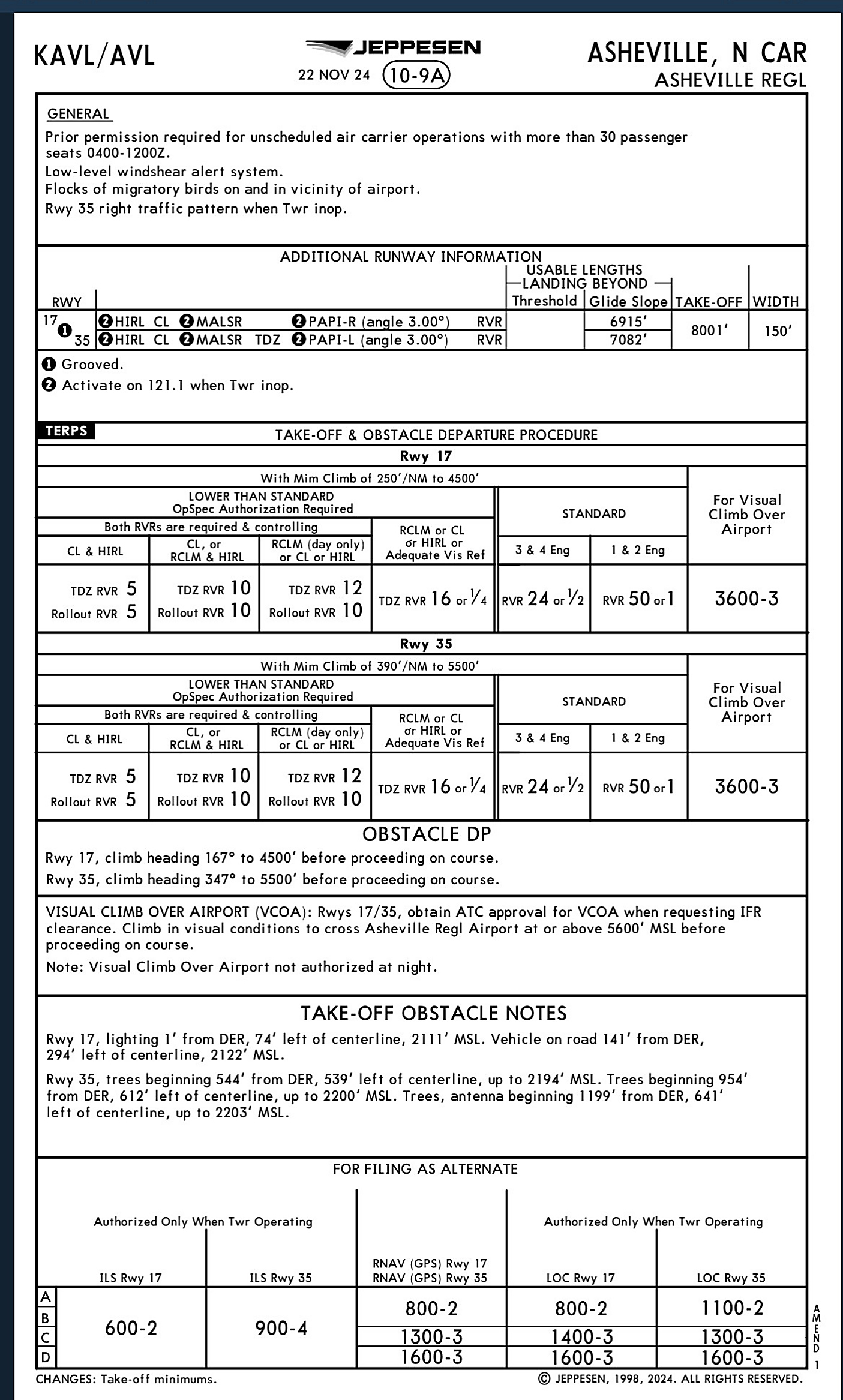
Rachel’s original question
Answers are saved on this device. “Check answer” compares your response against chart-specific key concepts and then shows the reference answer. You can edit speech transcripts before checking.
Type your answer or tap Answer aloud.
Commercial Maneuvers: 60 new cards cover steep turns, steep spirals, chandelles, lazy eights, and eights on pylons. Each answer includes its FAA handbook page reference. These explain handbook technique; use the current Commercial Pilot ACS for checkride tolerances and the aircraft POH/AFM and instructor guidance for airplane-specific procedures. Chapter 10 PDF · Chapter 7 PDF.
Deck structure: the original 212-card master deck remains intact; Rachel’s uploaded study guide adds a separate Q&A set; and chart-based study-guide prompts live in the Chart Drills section so no missing answer key is invented. Repeated questions are intentionally retained. Company-specific, aircraft-specific, and chart-specific answers must be verified against the current POH, FCOM/QRH, OpSpecs, and chart revision.
Deck structure: the original 212-card master deck remains intact; Rachel’s uploaded study guide adds a separate Q&A set; and chart-based study-guide prompts live in the Chart Drills section so no missing answer key is invented. Repeated questions are intentionally retained. Company-specific, aircraft-specific, and chart-specific answers must be verified against the current POH, FCOM/QRH, OpSpecs, and chart revision.